How to Water a Bonsai Tree: The Complete Guide
When to Water Your Bonsai
The number one rule of bonsai watering is to never follow a fixed schedule. Instead, water your tree when the top centimetre of soil begins to feel dry. Push your finger gently into the substrate: if it still feels moist below the surface, wait another day. If it feels dry, water thoroughly.
Most bonsai need watering every one to three days during the growing season, but this varies widely depending on species, pot size, substrate composition, and local climate. Small pots and fast-draining substrates like pure akadama dry out faster than large pots with organic soil mixes.
Watering Techniques: Soaking vs Overhead
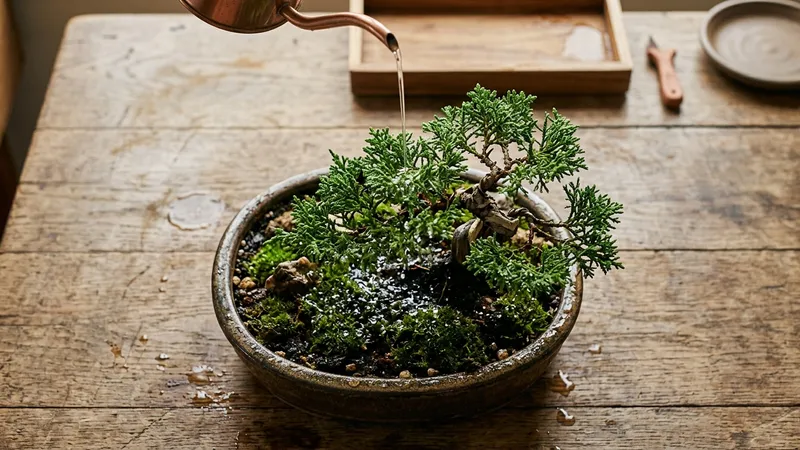
The most effective method is overhead watering with a fine-nozzle watering can. Water slowly and evenly over the entire soil surface until water flows freely from the drainage holes. Wait a minute, then water again to ensure the substrate is fully saturated. A single quick pass often leaves dry pockets inside the root ball.
Soaking, or immersion watering, involves placing the entire pot in a basin of water up to the rim and leaving it for five to ten minutes. This method is ideal for trees that have become extremely dry, or for substrates that have become hydrophobic and repel water from the top. Use it as a rescue technique rather than a daily routine, since prolonged soaking can reduce oxygen at the roots.
Seasonal Watering Adjustments
In spring and summer, bonsai are in active growth and transpire heavily. Outdoor trees may need watering twice a day during heatwaves, especially those in small or unglazed pots. Move trees out of direct afternoon sun if they dry out within hours, or switch to a more water-retentive substrate at the next repotting.
In autumn and winter, growth slows and water requirements drop significantly. Reduce watering frequency but never let the soil dry out completely, even for dormant deciduous species. Indoor tropical bonsai kept near heating systems may need more water in winter than you expect, because heated air pulls moisture from the foliage quickly.
Common Watering Mistakes
Overwatering is the leading cause of root rot in bonsai. If the substrate stays waterlogged because of poor drainage or compacted soil, roots suffocate and die. Ensure your pot has open drainage holes and your substrate provides adequate aeration. Yellowing lower leaves and a musty smell from the soil are early signs of overwatering.
Underwatering is equally dangerous. If a bonsai wilts and the leaves crisp at the edges, the root system has already suffered damage. To recover, soak the pot in water for ten minutes, move the tree to a shaded spot, and mist the foliage. Prevent underwatering by checking your trees at least once a day, ideally in the morning before temperatures peak.
Bonsai Pilot tracks all of this for you automatically. Start tracking your bonsai care for free →