How to Fertilize a Bonsai Tree: NPK, Schedules & Techniques
Understanding NPK Ratios for Bonsai
Every fertilizer label displays three numbers separated by dashes, for example 10-6-6, representing the percentage of Nitrogen (N), Phosphorus (P), and Potassium (K). Nitrogen drives leaf and shoot growth, Phosphorus supports strong root development and flowering, and Potassium strengthens the tree's overall resilience against disease and temperature stress. For most bonsai during the growing season, a balanced or slightly nitrogen-heavy formula such as 10-10-10 or 10-6-6 works well.
In autumn, many growers switch to a low-nitrogen fertilizer like 0-10-10 to harden off the current year's growth and prepare the tree for winter dormancy. Avoid high-nitrogen feeds in late summer and autumn because they encourage soft new shoots that cannot withstand cold. Tropical and subtropical bonsai kept indoors year-round benefit from a balanced feed throughout the year, since they do not enter true dormancy.
Organic vs Chemical Fertilizers
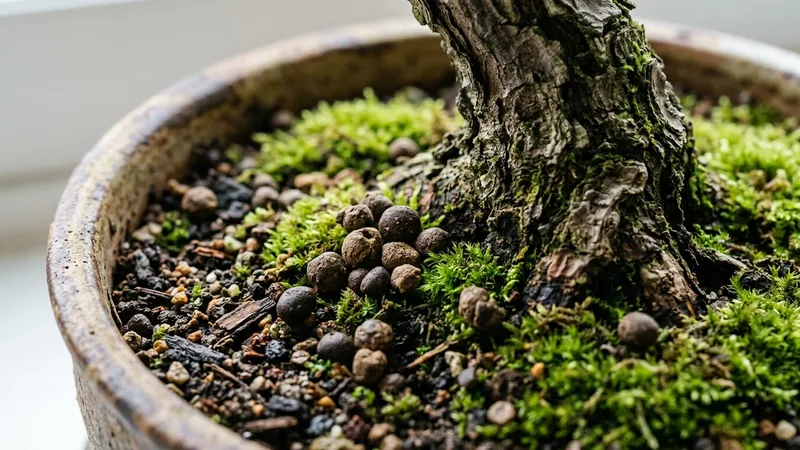
Organic fertilizers, such as rapeseed cake, fish meal, bone meal, and seaweed extracts, release nutrients slowly as soil microorganisms break them down. This gentle, sustained feeding reduces the risk of root burn and improves the soil ecosystem over time. Solid organic cakes placed on the soil surface are the traditional Japanese method and remain extremely popular because they feed steadily for four to six weeks per application.
Chemical (synthetic) fertilizers are water-soluble and deliver nutrients immediately. They are useful when a tree shows acute deficiency symptoms and needs a fast boost, but they are easy to over-apply. Excess salts can accumulate in the substrate, damage fine feeder roots, and cause leaf tip burn. If you use chemical fertilizers, dilute them to half the recommended strength and always water the tree thoroughly beforehand so the roots are not absorbing concentrated salts from dry soil.
Seasonal Fertilization Schedule
Begin fertilizing in early spring as soon as buds start to swell, this is when trees need the most energy. Apply a balanced fertilizer every two weeks through late spring and into summer. During the hottest weeks of midsummer, some growers reduce or pause feeding because extreme heat already stresses the tree. Resume in late summer and switch to a low-nitrogen formula in early autumn to encourage root growth and lignification of new branches.
Stop fertilizing outdoor temperate bonsai once leaves drop or the tree enters dormancy, usually from November through February in the Northern Hemisphere. Feeding a dormant tree wastes fertilizer and risks salt buildup. Indoor tropical bonsai such as Ficus, Carmona, and Serissa can be fertilized lightly throughout winter, roughly once a month at half strength, since they continue to grow under warm conditions.
Signs of Over-Fertilization and Under-Fertilization
Over-fertilization shows up as brown or scorched leaf edges, white salt crust on the soil surface, and in severe cases, sudden leaf drop. If you suspect fertilizer burn, flush the substrate with plenty of clean water, run water through the pot for several minutes to wash out excess salts. Remove any solid fertilizer cakes and wait at least four weeks before feeding again. Repotting into fresh substrate is the fastest remedy for heavily contaminated soil.
Under-fertilization is more subtle. Leaves become uniformly pale or yellow-green, new growth is small and weak, and the tree shows little vigor despite adequate light and watering. Older leaves may yellow and drop first as the tree redirects limited nutrients to newer growth. To correct a deficiency, begin with a half-strength liquid feed and increase to normal concentration over two to three applications. Consistent, moderate feeding throughout the growing season prevents most deficiency problems before they start.
Bonsai Pilot tracks all of this for you automatically. Start tracking your bonsai care for free →