Structural Pruning on Conifers: One Season or Two?
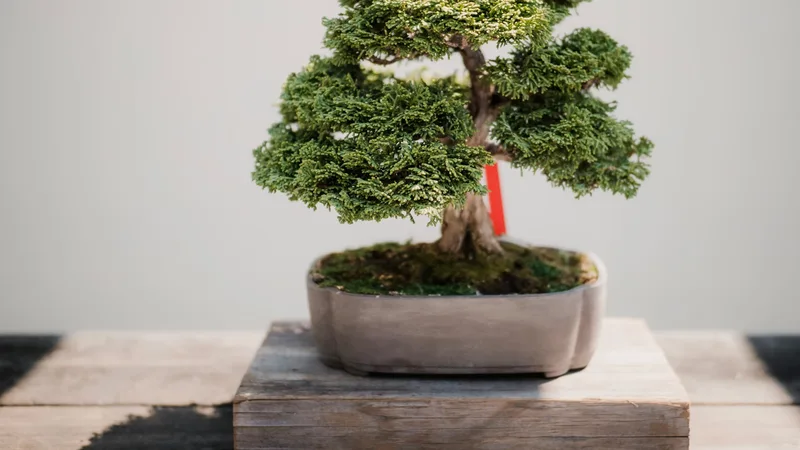
Two Valid Windows, Not One
For most bonsai conifers, structural pruning (the heavier work of removing whole branches to define trunk line) has a single recommended window: autumn, once the season's growth has slowed. But for hinoki cypress (Chamaecyparis obtusa) and the entire Juniperus genus (over 50 species, including the popular Juniperus chinensis), reference bonsai sources don't converge on one answer. Some recommend early spring, before bud break; others recommend late autumn, after the season's foliage has hardened off. Both show up as valid across the same body of guides, not as one source being right and another wrong.
The physical difference between these species and the rest of the conifers helps explain why. Pines and spruces bleed resin when cut during spring's active sap flow, which makes autumn clearly safer for them. Hinoki and juniper don't have that problem to the same degree, which leaves both seasons physiologically open, each with its own case: spring makes use of accumulated energy reserves right when the tree is ready to respond to a cut; autumn avoids interrupting growth mid-season.
How to Choose Between the Two
There's no fixed calendar rule that settles this, so the choice depends more on the tree's actual condition than on the date. If the tree is vigorous, recently entered a strong growth phase, and you have time to follow its recovery through spring and summer, the early-spring window tends to give a faster response to the cut. If the tree is winding down a strong growing season, has already hardened its new foliage, and you'd rather let it rest through winter without demanding an immediate reaction, the autumn window is the more conservative choice.
Avoid deciding this purely by app or by calendar. Look at the tree: foliage colour, vigour of the most recent growth, and whether any recent intervention (a repot, a previous hard prune) already has it recovering. A weakened tree shouldn't get structural pruning in either window until it regains vigour, regardless of the time of year.
Why Not Every Conifer Shares This
This two-window flexibility doesn't extend to the rest of the bonsai conifers. Pines, spruces, and most cypresses outside the Chamaecyparis genus are still best served by a single autumn window, precisely because of the resin argument that doesn't apply to hinoki and juniper in the same way. Treating every conifer as interchangeable on this question is a common mistake — the same question ("spring or autumn?") has different answers depending on the species.
Cryptomeria japonica is another case apart: sources describe a three-season pattern (spring, summer, autumn) with summer preferred for structural work, not a simple spring-or-autumn binary. When you're not sure about a specific species, treat autumn as the safer default, and only consider spring if you find species-specific guidance pointing that way.
Why Climate Zone Shifts One Window But Not the Other
If you live somewhere warmer or colder than the temperate reference used in general guides, you'd expect both windows to shift. But the two biological triggers are different: spring bud break is driven mainly by accumulated heat, which arrives earlier in a warmer climate, so that window makes sense to move earlier. Autumn slowdown in conifers is driven mainly by photoperiod (shortening days), which depends on latitude, not temperature — two locations at the same latitude can have very different winter climates and still share the same October day length.
So in a mild climate like Portugal's Atlantic coast, the autumn window stays fixed around October–November, while the spring window can move moderately earlier. It's counterintuitive at first ("warmer climate should move everything earlier"), but treating both windows the same way ignores that they have different biological causes.
Bonsai Pilot tracks all of this for you automatically. Start tracking your bonsai care for free →