Juniper Bonsai Care Guide: Species, Styling & Year-Round Tips
Popular Juniper Species for Bonsai
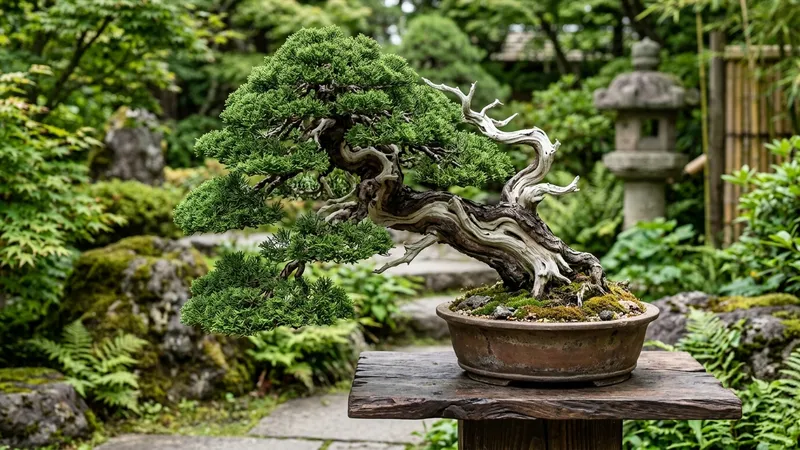
Junipers are among the most iconic bonsai species worldwide, prized for their rugged bark, flexible branches, and evergreen foliage. The most popular varieties include Juniperus chinensis (Chinese juniper), Juniperus procumbens 'Nana' (Japanese garden juniper), Juniperus rigida (needle juniper), and Juniperus squamata. Each has a distinct character: chinensis develops dense scale-like foliage perfect for compact pads, while procumbens 'Nana' is a creeping variety ideal for cascade and semi-cascade styles.
When choosing a juniper for bonsai, consider your climate and experience level. Procumbens 'Nana' is the most forgiving species and widely recommended for beginners, it tolerates heavy styling and recovers quickly from root work. Chinensis varieties like 'Itoigawa' and 'Shimpaku' are favourites among experienced growers for their fine-textured foliage and natural ability to form deadwood. Rigida junipers offer dramatic needle foliage and a more wild, untamed aesthetic that works well in literati and windswept styles.
Sunlight, Placement & Why Junipers Must Live Outdoors
Junipers are strictly outdoor trees. Never keep a juniper bonsai indoors, they require direct sunlight, natural temperature fluctuations, and a cold winter dormancy period to remain healthy. A juniper kept indoors will slowly decline over weeks or months, often turning brown from the inside out before the owner realizes anything is wrong. Place your juniper where it receives at least five to six hours of direct sunlight daily, ideally in full sun throughout the day.
Watering a juniper requires attention to the balance between moisture and drainage. Water thoroughly when the top layer of substrate feels dry, allowing excess water to flow freely from the drainage holes. Junipers prefer slightly drier conditions compared to most deciduous species, but they should never dry out completely. In summer, you may need to water daily or even twice daily during heatwaves. Reduce frequency in winter but never let the soil become bone dry, as the evergreen foliage continues to transpire even during dormancy.
Jin and Shari: Deadwood Techniques for Junipers
Junipers are the premier species for deadwood work in bonsai. Jin refers to stripped and bleached deadwood on branches, mimicking limbs broken by wind or lightning in nature. Shari is the term for deadwood carved along the trunk, creating dramatic strips of exposed, weathered wood alongside living bark (called live veins). These techniques give juniper bonsai their aged, weathered appearance and are central to classical Japanese bonsai aesthetics.
To create jin, remove the bark from a branch using jin pliers, then shape the exposed wood with the pliers by crushing and peeling fibres to create a natural, tapered look. For shari, carefully carve along the trunk with a sharp knife, always preserving enough live bark to sustain the foliage above. Once the deadwood dries, treat it with lime sulphur (jin seal) to bleach and preserve the wood. Reapply lime sulphur once or twice a year. Deadwood work is best done in late spring when the tree is actively growing and sap flow helps the live bark separate cleanly.
Wiring, Pruning & Winter Care
Junipers respond exceptionally well to wiring, which is the primary method for shaping branches and creating the compact foliage pads that define the species in bonsai. Use copper or aluminium wire and apply it in autumn or early winter when growth has slowed. Juniper branches can be bent aggressively, far more than most species, but always wrap bends with raffia tape when making dramatic changes to prevent bark cracking. Check wires monthly during the growing season and remove them before they bite into the bark.
Prune junipers by pinching new growth with your fingers rather than cutting with scissors, as cut needles turn brown at the tips. Pinch the soft, bright-green tips throughout the growing season to maintain shape and encourage back-budding. For structural pruning, thin out overcrowded interior growth to allow light and air to reach inner branches. In winter, protect junipers from sustained freezing winds by placing them in an unheated garage, cold frame, or sheltered spot. Most junipers tolerate temperatures down to minus ten degrees Celsius, but roots in shallow bonsai pots are more vulnerable to frost than those in the ground.
Bonsai Pilot tracks all of this for you automatically. Start tracking your bonsai care for free →